
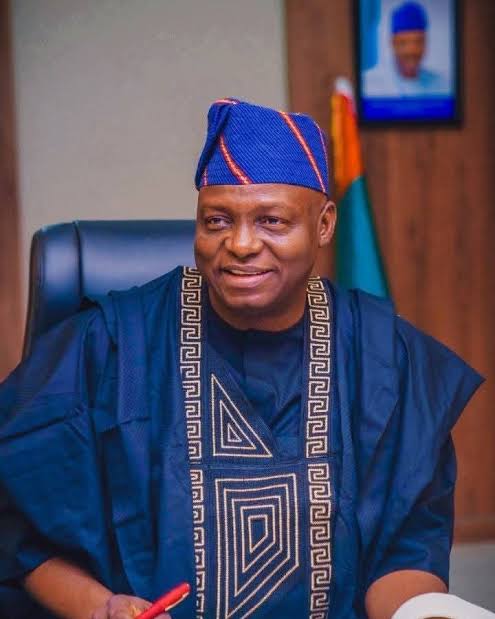
Professor Nentawe Goshwe Yilwatda is a Nigerian engineer, academic, and politician who currently serves as the National Chairman of the All Progressives Congress (APC), a position he has held since July 24, 2025. Before his rise to the top of Nigeria’s ruling party, he served as Minister of Humanitarian Affairs and Poverty Reduction under President Bola Tinubu, and prior to that, as Nigeria’s Resident Electoral Commissioner for Benue State. He was re-elected as APC National Chairman at the party’s 8th National Convention held in Abuja on March 27, 2026.
Nentawe Yilwatda Profile
| Name | Nentawe Yilwatda |
| Real Name | Nentawe Goshwe Yilwatda |
| Date of Birth | 8 August 1968 |
| Age | 58 years |
| State of Origin | Plateau State |
| Tribe | Berom |
| Nationality | Nigerian |
| Occupation | Engineer and Politician |
| Religjon | Christianity |
| Marital Status | Married |
| Net Worth | $1 Million |
| Copied from | contents101.com |
Educational Background
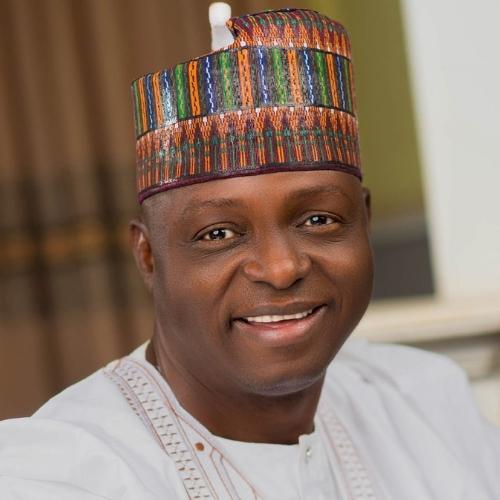
Nentawe Yilwatda attended LGED Primary School in Dungung and later Boys’ Secondary School in Gindiri, Plateau State, where he completed his secondary education in 1986. Yilwatda earned his first degree in Electrical and Electronic Engineering from the Federal University of Agriculture, Makurdi, in 1992.
He went on to obtain a Master of Engineering degree from Abubakar Tafawa Balewa University (ATBU) in Bauchi, and a PhD in Digital Systems Engineering from the University of Nigeria, Nsukka. He also received specialised training in Building Electronic Governance Structure at the United Nations University International Institute for Software Technology in Macau, China.
Career
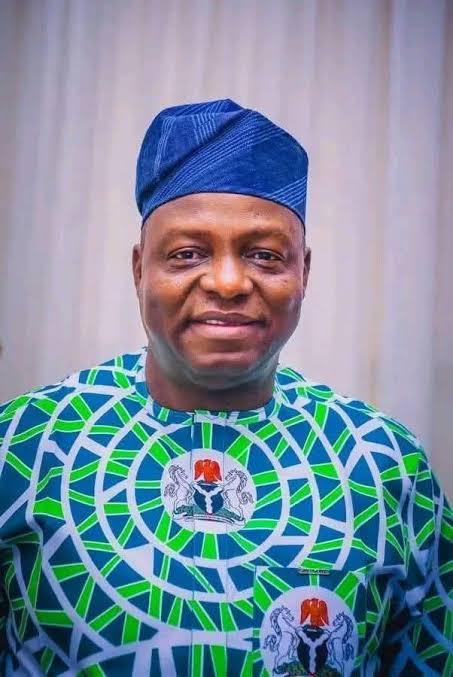
Yilwatda began his teaching career in 1995 at Plateau State Polytechnic in Barkin Ladi. In 1996, he joined the Federal University of Agriculture, Makurdi, where he rose to the rank of Professor of Electrical Engineering. For 12 years, he served as the Director of ICT at the institution, developing a 10-year digital strategy and sitting on the university senate for 11 years.
On the international stage, he led a UNICEF-funded turnkey project from 2005 to 2012, overseeing the design, training, and installation of alternative energy systems for cold chain operations across multiple Nigerian states. He was also part of the Nigerian government’s energy research delegation to the United States and Canada and participated in a Cuban Government programme on energy efficiency in residential and public sectors. He worked with Tech-Ville USA to train software and renewable energy engineers in Ondo State, and contributed to the World Bank-funded STEP-B project that established the Nigeria Education and Research Network (NgREN).
He is a registered engineer with the Council for the Regulation of Engineering in Nigeria (COREN), a member of the Institute of Electrical and Electronic Engineers, the Nigerian Society of Engineers, and the Solar Society of Nigeria.
In 2017, President Muhammadu Buhari appointed him as Resident Electoral Commissioner (REC) for Benue State at the Independent National Electoral Commission (INEC), a position he held until 2021. He became known for initiatives to ensure displaced persons and people living with disabilities could exercise their voting rights.
He resigned from INEC in 2022 to contest the APC governorship primary in Plateau State, which he won, defeating several veteran politicians. However, he lost the 2023 gubernatorial election to the PDP’s Caleb Mutfwang. He accepted the final court ruling and remained a key figure in Plateau APC politics.
In October 2024, President Tinubu appointed him as Minister of Humanitarian Affairs and Poverty Reduction, replacing the suspended Betta Edu. In July 2025, the APC’s National Executive Committee unanimously named him as the party’s new National Chairman, succeeding Dr. Abdullahi Ganduje. He was sworn into office at the APC national secretariat in Abuja. At the March 2026 national convention, he was returned unopposed through a consensus arrangement.
Controversies
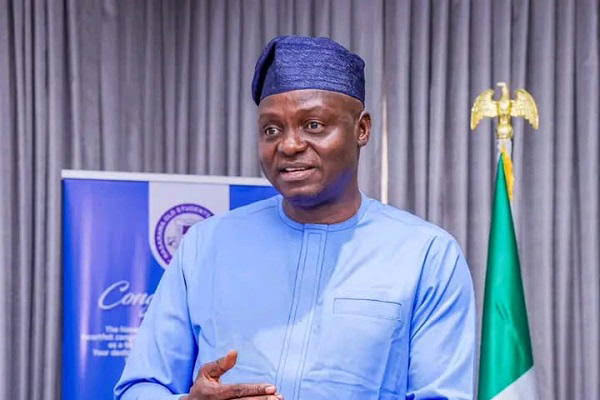
One of the major issues arose in 2026 when a lawsuit was filed against him and the All Progressives Congress by an aspirant, Fubara Dagogo. The case challenged his alleged exclusion from the party’s national convention process. Dagogo claimed that despite paying for nomination forms, he was not allowed to properly participate in the contest for National Vice Chairman (South-South).
The matter was taken to the Federal High Court in Abuja, where the court ordered substituted service of legal documents on Yilwatda and other party officials after initial attempts to serve them failed. The case sparked conversations about fairness, transparency, and internal democracy within the APC.
On the other hand, the APC argued that the issue was an internal party matter and should not be decided by the court, maintaining that such disputes fall under the party’s own constitutional processes. This raised broader debates about how political parties in Nigeria handle disputes and whether members get equal opportunities during primaries and congresses.
In addition, Yilwatda’s emergence and re-election as APC National Chairman through a consensus arrangement also drew mild criticism from some observers who believe that consensus selections can limit open competition within political parties. Supporters, however, see it as a way to maintain unity and avoid internal conflict.
Nentawe Yilwatda Social Media Handle
https://www.facebook.com/nentaweyilwatda
Personal Life
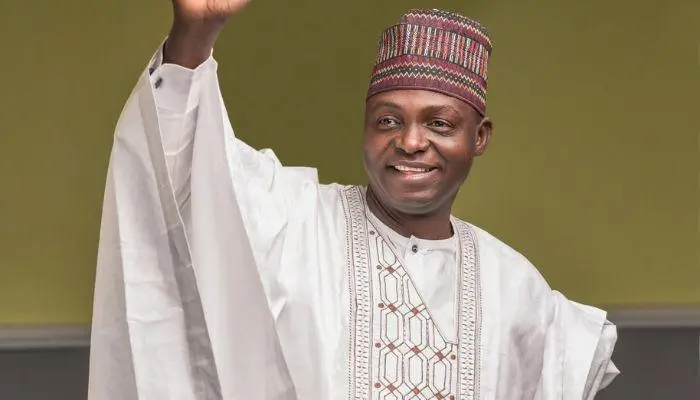
Nentawe Goshwe Yilwatda was born on August 8, 1968, in Dungung, a small village in Kanke Local Government Area of Plateau State. He grew up in a devout Christian home under the care of his father, the late Reverend Toma Yilwatda, and his mother, Mrs. Yilwatda. Professor Yilwatda is married to Dr. Martina Yilwatda Goshwe, and they have a son named Beji Nentawe Goshwe. The family resides in Rayfield, Jos South, Plateau State. He is a member of COCIN church.
Nentawe Yilwatda Net Worth
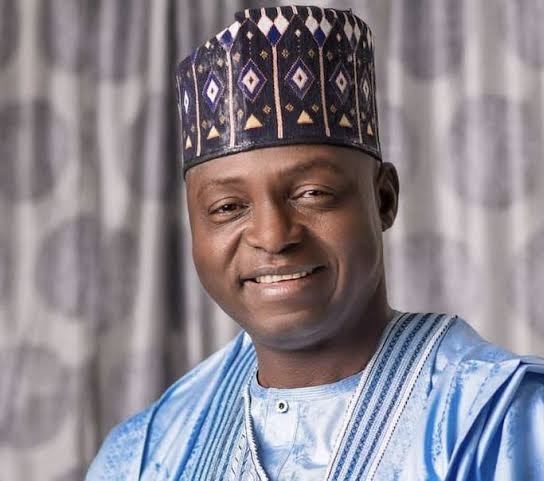
Nentawe Yilwatda’s net worth is estimated at around $1 million.