
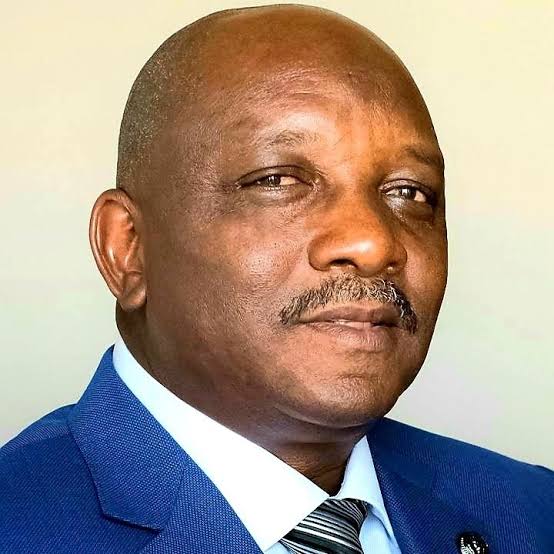
Saleh Mamman, born on January 2, 1958, in Taraba State, a trained electrical engineer and former civil servant, was appointed Minister of Power under President Muhammadu Buhari in 2019, with a mandate to fix what had broken. Instead, he is now a convicted criminal, sentenced in absentia to 75 years in prison, a fugitive from the most severe corruption judgment ever handed down to a serving or former Nigerian government minister. His story is a case study in how power can be used to deepen the very darkness it was meant to illuminate.
Saleh Mamman Profile
| Name | Saleh Mamman |
| Real Name | Saleh Mamman |
| Date of Birth | January 2, 1958 |
| State of origin | Taraba |
| Tribe | Hausa |
| Nationality | Nigerian |
| Occupation | Politician |
| Religion | Islam |
| Marital Status | Married |
| Net Worth | $1 million |
| Copied from | content101.com |
Educational Background
Saleh Mamman began his higher education at Kaduna Polytechnic, where he obtained a Higher National Diploma in Electrical and Electronics Engineering in 1988, building a technical foundation that would later make him a credible candidate for one of the most sensitive ministerial briefs in the country. He later attended Bayero University in Kano, where he earned a Master of Business Administration in 2015, adding administrative and managerial expertise to his engineering background. The combination of technical training and business education made him appear, on paper, exactly the kind of professional Nigeria needed to take on its chronic electricity infrastructure crisis.
Career
Saleh Mamman started his working life in 1981 as a teacher at a technical school in Mubi, Adamawa State, a modest beginning that did not indicate the heights and depths that lay ahead. In 1992, he transferred his service to Taraba State following the state’s creation, joining the Taraba State Ministry of Works where he rose through the civil service ranks to the position of Assistant Director in charge of Electrical Services.
He retired from civil service in 2002 and transitioned into business and politics full-time. His political career included serving as the pioneer State Party Chairman of the Congress for Progressive Change in Taraba State, aligning himself with what would eventually become the APC political machinery that brought President Buhari to power.
In August 2019, President Buhari appointed him as Minister of Power, swearing him in on August 21 of that year. He held the portfolio until September 2021, when he was sacked during a cabinet reshuffle and replaced by Abubakar Aliyu.
During his tenure, he was responsible for overseeing Nigeria’s most ambitious energy infrastructure investments, including the Mambilla Hydroelectric Power Plant in Taraba State, a proposed 3,050 megawatt facility that would have been Nigeria’s largest electricity generating installation, and the Zungeru Hydroelectric Power Plant. Both projects received enormous federal appropriations. Neither delivered the results Nigerians were waiting for. After leaving office, he reportedly purchased the APC governorship nomination form for Taraba State ahead of the 2027 elections, an ambition that came to a rather dramatic end in a Federal High Court in Abuja on May 13, 2026.
Controversies
Saleh Mamman’s controversies do not exist in the ordinary register of political friction or policy disagreement. They sit at the level of institutional crime, and they have ended with the stiffest corruption sentence ever imposed on a Nigerian government official.
The EFCC first arrested him on May 10, 2021, the same year he was removed from the cabinet. The charges that eventually crystallised were sweeping. He was arraigned on July 11, 2024, before Justice James Omotosho of the Federal High Court in Abuja, facing a 12-count charge of conspiracy and money laundering involving approximately N33.8 billion in public funds. Prosecutors alleged that he had conspired with senior ministry officials and private entities to systematically divert funds earmarked for the Mambilla and Zungeru hydroelectric projects through shell companies, Bureau de Change operators, and complex financial arrangements. Among the specific allegations was a finding that he paid approximately $655,700 in cash for a property in Abuja without using any financial institution, in direct violation of anti-money laundering laws. The EFCC brought 17 witnesses to the stand and tendered 43 separate exhibits in the course of the trial.
When the prosecution closed its case, Mamman’s legal team filed a no-case submission, arguing the evidence was insufficient. Justice Omotosho rejected that submission on December 11, 2025, ruling that a prima facie case had been established and that Mamman was required to enter a defence. The case was adjourned to February 23, 2026, for the defence to begin. He never showed up. On May 7, 2026, Justice Omotosho convicted him in absentia on all 12 counts, having found that the evidence established his guilt beyond a reasonable doubt. Sentencing was fixed for May 13, 2026.
On that date, the judge delivered a ruling that sent shockwaves through Nigeria’s political and legal establishment. He sentenced Mamman to seven years on each of ten counts, three years on one count, and two years on another, and crucially, ordered that all 12 sentences run consecutively rather than concurrently, producing a total custodial term of 75 years. The judge criticised Mamman directly, saying that rather than creating a legacy to address Nigeria’s epileptic power supply, he had been living large at the expense of ordinary citizens. He ordered the forfeiture of all properties and funds recovered from Mamman, directed him to refund the outstanding balance of the diverted N22 billion, and instructed all Nigerian security agencies as well as Interpol to apprehend him wherever he was found and hand him over to the Nigerian Correctional Service. As of the time of this publication, Mamman remained at large, a fugitive from what legal analysts described as the most historic anti-corruption judgment in Nigeria’s post-independence history. He is the first minister who served under Buhari, a president widely celebrated for his anti-corruption stance, to be jailed for graft.
Saleh Mamman Social Media Handle
Facebook: Saleh Mamman Facebook Page
Personal Life
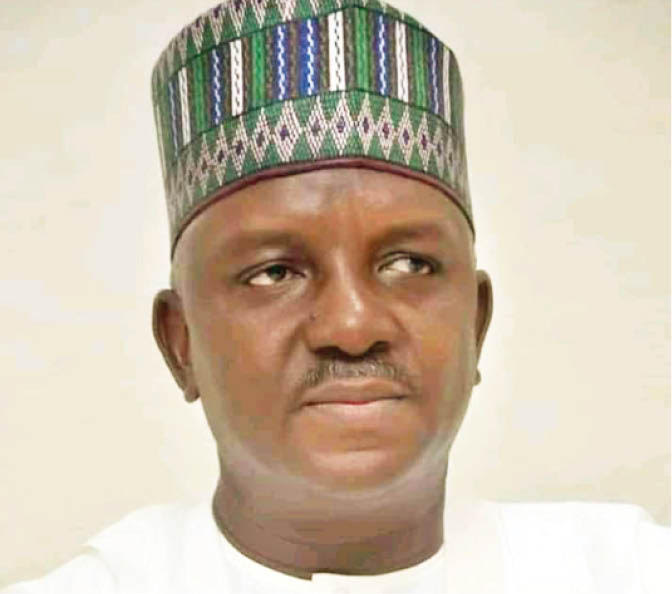
Saleh Mamman was born on January 2, 1958, in Taraba State in northeastern Nigeria, and is of Mumuye ethnic descent. He is believed to be married with children, though he has maintained a consistently private family life throughout his public career. As a minister, he kept his domestic affairs firmly away from public scrutiny, and since his conviction and disappearance, no member of his immediate family has made any public statement. He was reportedly interested in contesting the Taraba State governorship election in 2027 before the Federal High Court’s verdict permanently altered those plans.
Saleh Mamman Net Worth
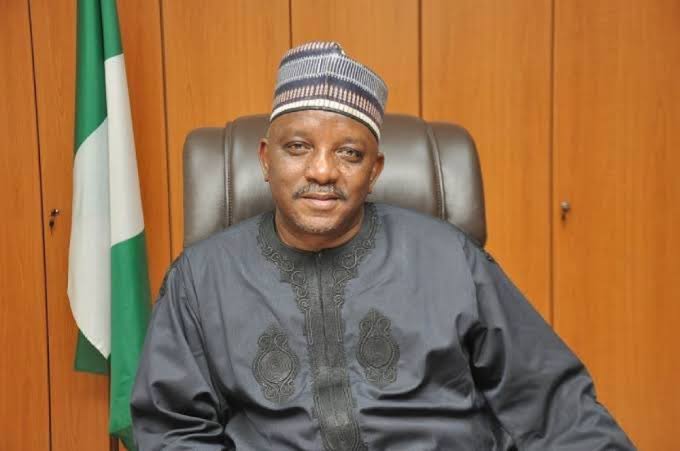
Saleh Mamman’s net worth is estimated to be around $1 million