

Anthony Michael Fadell, born on March 22, 1969, in Detroit, Michigan, is an American engineer, inventor, entrepreneur, and investor widely celebrated as the Father of the iPod. He is 57 years old, the co-creator of the iPod and iPhone, the founder of Nest Labs, and the author of the bestselling book Build. He holds over 300 patents and remains one of the most influential voices in Silicon Valley on product design, innovation, and the future of artificial intelligence.
Tony Fadell Profile
| Name | Tony Fadell |
| Real Name | Anthony Michael Fadell |
| Date of Birth | March 22, 1969 |
| Nationality | American |
| Occupation | American engineer, inventor, entrepreneur, and investor |
| Religion | Christianity |
| Marital Status | Married |
| Net Worth | $800 million |
| Copied from | content101.com |
Educational Background
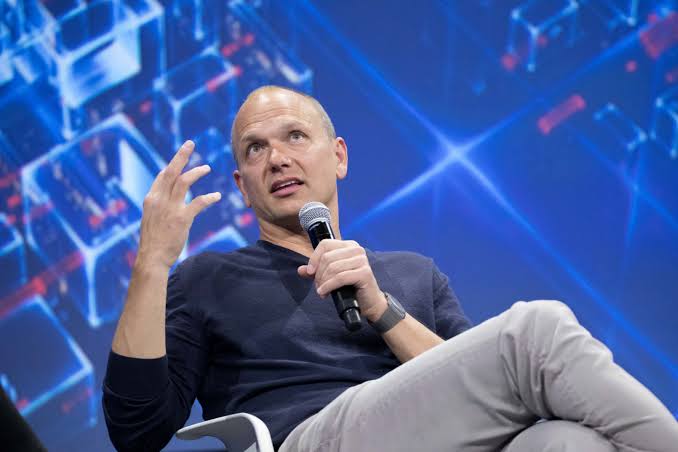
Tony Fadell grew up in Grosse Pointe Farms, Michigan, where he attended Grosse Pointe South High School. His father was a sales executive at Levi Strauss and Co., and his background is Lebanese and Polish-Russian. He earned a Bachelor of Science degree in Computer Engineering from the University of Michigan in 1991. While still a student, he founded Constructive Instruments, a small company that marketed MediaText, a multimedia composition software for children, demonstrating from a very early age that he was not the kind of person who waited for graduation to start building things.
Career

After graduating, Fadell joined Apple spinoff General Magic in 1992, working alongside Sony, Philips, Matsushita, and Toshiba on what was essentially a precursor to the iPhone, built fifteen years too early. In 1995, he co-founded Philips’ Mobile Computing Group, serving as its Chief Technology Officer and Director of Engineering until 1998, then as Vice President of Philips Strategy and Ventures until 1999.
In February 2001, he joined Apple Inc. and changed the world. As Senior Vice President of Apple’s iPod division, he led the team that created the first 18 generations of the iPod and the first three generations of the iPhone.
The iPod began reaching less than one percent of its addressable market because it only worked with Macs. Against Steve Jobs’ explicit wishes, Fadell and his team secretly built a Windows-compatible version, a decision he credits with saving the product and arguably the company. On the iPhone, the defining early battle was between physical keyboards and a glass multi-touch screen. The data never clearly favoured the virtual keyboard, but Jobs exercised the kind of taste-based authority Fadell has spent his career defending, declared the debate over, and the iPhone as we know it was born.
In May 2010, Fadell co-founded Nest Labs in Palo Alto with former Apple colleague Matt Rogers. Nest’s flagship product, the Nest Learning Thermostat, was priced at $249, five to six times the cost of a traditional thermostat. The logic was airtight: it could save homeowners $800 to $1,200 annually in heating and cooling costs, turning a mundane household appliance into a compelling financial decision. Google acquired Nest for $3.2 billion in 2014. Fadell served as CEO until his resignation in 2016. He subsequently founded Future Shape, later rebranded as Build Collective, a global investment and advisory firm coaching over 200 startups working on foundational deep technology.
In May 2022, he published Build: An Unorthodox Guide to Making Things Worth Making, which became a New York Times and Wall Street Journal bestseller.
In September 2025, he was named the inaugural MIT MAD Designer in Residence, and in January 2026 he delivered a widely attended lecture at MIT’s MITdesignX programme. In June 2026, speaking on Lenny’s Podcast, he laid out his framework for building enduring products in the AI era, warning that artificial intelligence tools were producing what he called fast fashion software and urging builders not to surrender to the machine.
Controversies
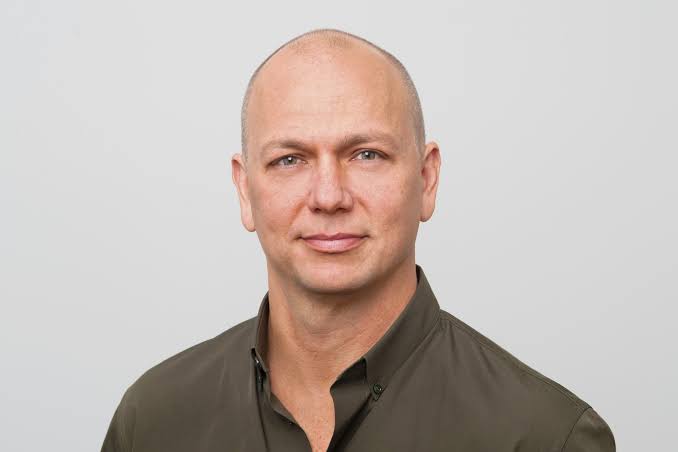
Tony Fadell’s most persistent controversy is his management style, which he himself has characterised as a form of benevolent dictatorship. During his time at Apple and Nest, he was known for an intense, demanding leadership approach that drew both intense admiration from those who produced their best work under his direction and fierce criticism from those who found it bruising and difficult to sustain. Former Nest employees spoke publicly about a management culture that was stressful and hierarchical, and the circumstances of his resignation from Nest in 2016 were never fully explained, with Google and Fadell offering different characterisations of the departure.
His more recent controversy has been his public positioning on AI. In June 2026, he cited leaked code from Anthropic’s Claude as an example of technically brittle AI-generated architecture, saying anyone who looked at it as a real software architect would have thrown up, describing the main loop as an opaque monolith rather than properly layered, maintainable code. The comment generated significant discussion in tech circles, with some agreeing with his architectural critique and others arguing that he was applying hardware-era standards to a fundamentally different kind of system.
His broader argument that AI tools are producing throwaway products, and that the companies best positioned to endure are those that treat AI as a prototyping accelerator rather than an architectural decision-maker, has become one of the most cited frameworks in the current AI product debate.
Tony Fadell Social Media Handle
https://www.instagram.com/tfadell?igsi=MWp4ZGpmaDFoY2pqOA==
Personal Life

Anthony Michael Fadell was born on March 22, 1969, in Detroit, Michigan, making him 57 years old. He is of Lebanese and Polish-Russian descent. He is married to Danielle Lambert, a former Vice President of Human Resources at Apple, whom he met while at the company. The couple has three children and is based in Paris, France, where Fadell has lived for several years.
He began developing Nest’s business plan while living in Paris, frustrated by the same energy inefficiency problem in his Lake Tahoe home that millions of homeowners face globally. He has described Paris as giving him perspective on American product culture that he could not have gained from inside Silicon Valley.
Tony Fadell Net Worth

Tony Fadell’s net worth is estimated to be around $800 million.